

October 27, 2026
October 27, 2026
Will AI Market Research Have Its Own Human Backswing?

By
Liz White

A few weeks ago, I was talking with an Insights Director about synthetic respondents and digital twins. Their team has been experimenting with both, and they had recently moderated an in-depth interview with a synthetic respondent. They told me that by the end of the session, all they really wanted was to go talk to a human.
Then they took it a step further. The next study they wanted to run was an in-home ethnography, where you sit with participants in their own space and watch how they actually live.
Their team is still experimenting with these tools, and I think that’s the right call. Their reaction stuck with me because it sounds a lot like what's happening across culture right now. After years of optimizing everything through a screen, people are going back to dinner parties, live events, and conversations with an actual person on the other end.
Last month's playbook covered the tools in today's AI market research kit and how to choose between them. This month I want to look at what happens to researchers once they start using those tools day to day, and whether insights is heading for the same swing back toward human connection that so many people seem to be feeling.
Why AI Earned Its Place in the Toolkit

Synthetic respondents are AI models built from real consumer data, designed to answer questions the way a particular type of customer probably would. Digital twins take the idea further by modeling a specific segment so teams can test ideas against it on demand. You can run an interview at midnight, on deadline, without waiting on recruitment.
That speed has real value. Synthetic tools are a practical way to pressure-test a discussion guide before fieldwork, narrow a long list of concepts, or get a directional read when a decision can't wait. For many early-stage questions, that's exactly what a team needs, and it frees up time and budget for the work that comes after.
As these tools become part of everyday workflows, the more interesting question is how they sit alongside human research. Early research is helping answer that. A 2026 study in NIM Marketing Intelligence Review found that synthetic answers tended to run more positive than answers from real people, by an average of 1.2 points on a seven-point scale. That makes synthetic data a helpful way to sketch early direction, with real participants adding the nuance and emotion behind it.
The Backswing Is Already Happening Outside Research
Step back and look at culture, and that reaction makes even more sense. On Brand Magazine recently made the case that the hyper-optimized, wellness-first years of the early 2020s are giving way to something more social. After years of sleep scores and 6 a.m. workouts, many people are looking for more connection in how they spend their free time. Day parties and pop-up dinners are filling calendars again, because people want to spend time in a room with each other.

You can see the same pull in how people want to be served. In a 6,000-person survey commissioned by AnswerConnect, 85% of consumers across the US, UK, and Canada said they'd rather speak to a real person when contacting a business, up from 83% the year before. People are using more technology than ever. They also want more of the moments that matter to include another person.
We wrote about a version of this in August, when the upcoming potential MySpace revival reminded people how much they valued authentic connection. This time the pull is coming from a new place: people who have spent real time with the newest tools and come away wanting more human contact alongside them. Insights tends to mirror the markets it studies, so it would make sense for researchers to feel that pull too.
What a Human Conversation Adds
The value of a live conversation shows up most clearly in three places.
The Moments a Moderator Listens For
Good moderators listen for more than answers. They notice the pause before someone responds, and the point where the story a participant tells starts to drift from the routine they describe. Those moments are where a moderator follows up, and they're often where the most useful findings come from.
Context You Can Only See in Person
A kitchen counter covered in half-used products says more about a routine than any summary of it. In-home and in-person research captures the physical side of a decision, from the clutter on the shelf to the shortcut someone invented to make a product fit their day. That’s the layer the Insights Director I spoke with was reaching for when they asked for an in-home study.
A Story Stakeholders Remember
Findings anchored in a real person travel through an organization differently than a data point does. When a stakeholder hears a customer explain something in their own words, the finding becomes something they believe and act on. That firsthand moment is one of the most persuasive things a research team can offer.
Five Signals Your Experiment Needs a Human Checkpoint
Plenty of questions are well served by a synthetic read on its own. These five signals point to the ones where adding a few real conversations will pay off.

1. The Answer Depends on How Something Feels
Preference is straightforward to measure. The feeling behind it, whether that's reassurance or pride, usually takes a conversation to understand.
What this looks like in practice: Say a bank uses synthetic respondents to compare three versions of a new account onboarding flow, and one comes out clearly ahead. A handful of in-depth interviews with real customers can then show why it wins, perhaps a single line of reassuring copy, so the team knows which part of the design to protect as it evolves.
2. The Decision Depends on Real-Life Context
When the answer lives in a home, a car, or a store aisle, seeing it firsthand is often the fastest way to understand it.
What this looks like in practice: Say a meal kit brand's digital twin suggests customers want larger portions. A few in-home visits might show that fridge space is shaping the decision, which points the team toward a packaging change they can test next.
3. The Stakes Are High Enough to Double-Check
A launch decision or a category entry carries enough weight that a few extra conversations are a small investment next to the budget riding on the outcome.
What this looks like in practice: A synthetic screen narrows ten concepts to two. Taking those two into live interviews before anyone commits budget gives the team confidence in the choice, plus the customer language to explain it to leadership.
4. You're Getting to Know a New Audience
Synthetic tools are built from data about people a brand already understands. When you're reaching a new segment, firsthand conversations help you learn which questions to ask in the first place.
What this looks like in practice: Say a wellness brand is expanding to an older audience. Early conversations with real people in that group can surface routines and motivations the team hadn't thought to include, which makes every synthetic test that follows sharper.
5. You Finish the Session Wanting to Talk to Someone
Your own reaction counts as data too. When an AI market research session leaves you curious about the person behind the answers, that instinct is usually pointing at something worth exploring.
What this looks like in practice: For the Insights Director I spoke with, the next step was an in-home ethnography. For other teams, it might be as simple as scheduling a few live interviews to sit alongside the synthetic results.

Where Experiments Tend to Drift
These come up often as teams fold new tools into their workflow, and each one is easy to correct.
Letting the newest tool set the scope. When an AI market research platform is already licensed, it's natural to reach for it first. Starting with the question, and asking what it would cost the business to get the answer wrong, keeps the choice deliberate. It's the same test we suggested in last month's playbook.
Skipping the checkpoint when timelines get tight. The human step is often the first thing to go when a deadline moves up. Planning it in from the start, even at a small scale, keeps it part of the study.
Letting stakeholders drift away from customers. As more findings arrive as summaries, decision-makers can go months without hearing from a real customer. A regular listening session, even an hour a quarter, keeps that connection alive.
How to Know Whether Your Team Is Feeling the Backswing
A useful gut check: look back at your last few AI market research studies and notice which ones left someone on the team wanting to talk to a real participant. Those are the projects where a human checkpoint would have added the most, and they're a good guide for planning the next ones.
Every wave of new research technology eventually finds its place next to the methods that came before it, and synthetic respondents will too. The open question is whether our industry will feel the same backswing the rest of culture is feeling right now, with researchers choosing to spend more time with people even as their tools get faster.
My guess is that it's already starting, one interview at a time.
Where Studio Fits
Studio was built to make human-led qualitative research easy to bring into any study, alongside whatever else is in your toolkit. Our network includes 50+ vetted moderators, each with a profile covering methodology specialties and client-verified reviews, so finding someone to run in-depth interviews or in-home ethnographic research is straightforward. Every moderator completes a four-step vetting process before working on a live project.
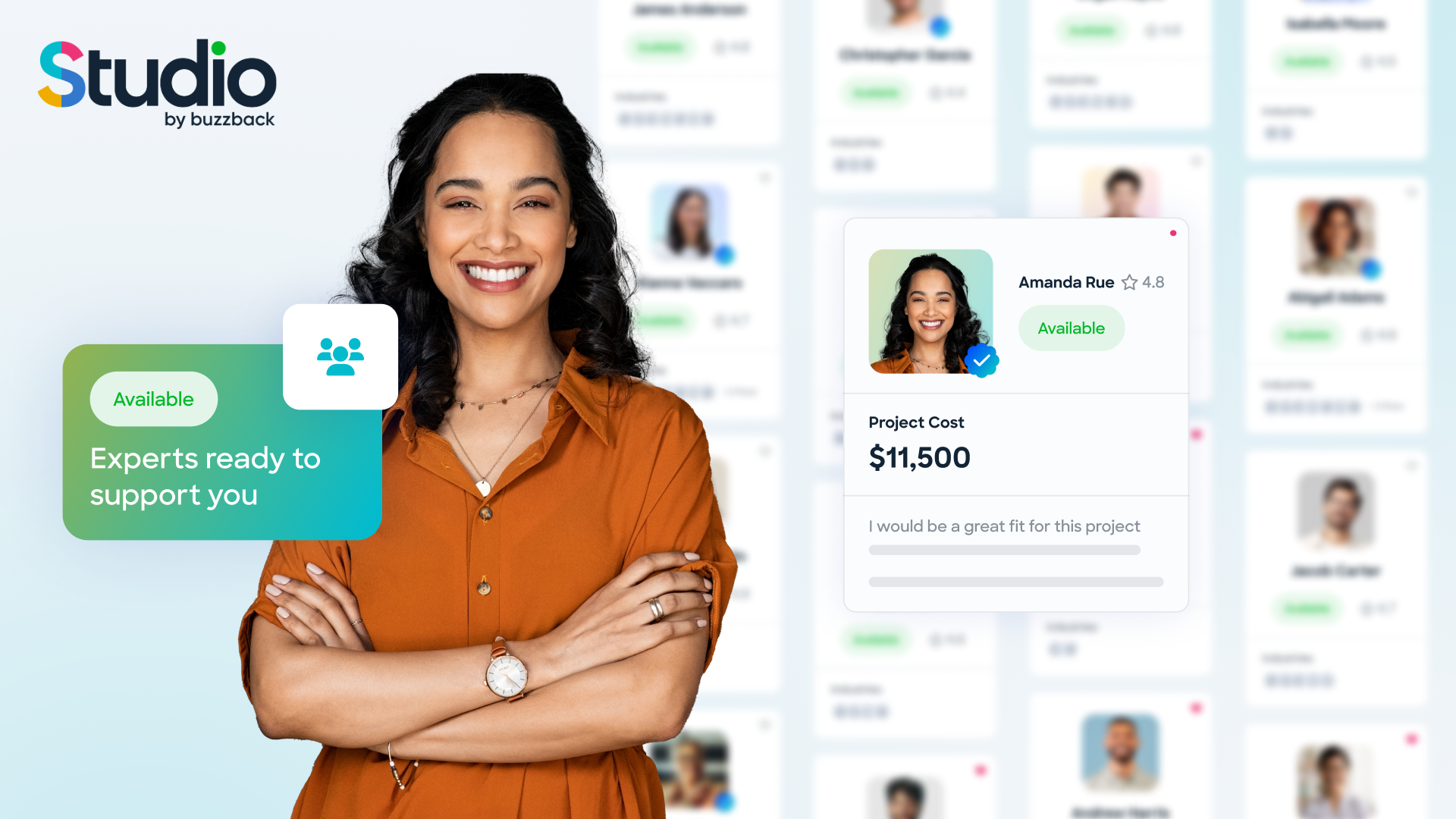
Synthetic tools and human conversations both belong in a modern research program. Studio's platform gets you from RFP to a matched, vetted moderator in 48 hours, so adding a human checkpoint fits the pace your team already works at.
Browse Studio's moderator network and find the right expert for your next human checkpoint.
By
Liz White
Subscribe
Stay up to date on industry insights and resources from Studio.


