

June 16, 2026
June 16, 2026
Your Qual Toolkit Has Changed. The Standard for Good Moderation Hasn't

By
Liz White

The Hidden Variable in Every Qual Study
The researcher's toolkit has changed. AI moderation platforms, asynchronous video interviews, and DIY interview tools have made it genuinely easier to run qual faster and at lower cost. That's not a bad thing. It's the reality of how modern insights teams operate.
But here's what hasn't changed: the quality of what you get out of a qual session still depends heavily on the skill of the person running it. Whether that's you, an AI tool, or a professional moderator, the same behaviors separate a session that produces real insight from one that produces a polished summary of what participants were already willing to say.
So if you're going to run your own interviews, or supervise an AI-moderated study, or evaluate a moderator before you hire one, you need to know what good actually looks like. Not in theory. In practice.
This is what expert moderators do.
These are the behaviors that separate data you can trust from data that sounds good until someone on your team asks a follow-up question.
Why Most Moderation Falls Short (And It's Not About Experience)
The default assumption is that more experience equals better moderation. It's an understandable shortcut, but that’s not the full story.
Years on a resume tell you how many sessions someone has run. They don't tell you how they behaved in the room, what instincts they've developed, or whether they've built the specific skills that turn a good conversation into genuinely useful data.
This gap is just as real in DIY moderation. Researchers who conduct their own sessions often don't know what they're missing. Leading questions feel neutral to the person asking them. Inadequate probing feels thorough in the moment. Non-verbal signals go unnoticed because you're focused on managing the guide. The result is data that reflects what participants were asked, not what they actually think.
AI moderation tools have their own version of this problem. They can capture and code what participants say. They're less reliable at detecting what participants almost said (but didn’t), redirecting when they miss the point of the question, or following a non-linear flow of the questions. Knowing where AI tools have limits is part of using them well.
The good news: the behaviors that define expert moderation are specific and learnable. And once you know them, you can apply them yourself, coach an AI-assisted workflow around them, or identify them in a moderator before you hire one.
What Great Moderators Actually Do: 7 Specific Behaviors
1. They Follow the Unexpected Answer, Not the Script
A discussion guide is a map, not a script. Skilled moderators know the difference.
When a participant says something surprising, an average moderator notes it and moves on. They're focused on what comes next. A great moderator stops. They slow down. They say "tell me more about that" and follow it for five minutes of unplanned exploration.
That's usually where the real insight lives. Not in the answer to the planned question, but in the exploration of the unplanned one. The guide exists to ensure coverage. The moderator's judgment exists to ensure depth.
If you're running your own interviews, this is the hardest habit to build. It requires you to hold the structure loosely enough to pursue something unexpected, even when you're managing time and trying to hit every topic on your guide. Practice it anyway. The moments when you deviate from the script are often the ones worth the most in analysis.
2. They Probe Silence, Not Just Speech
Hesitations are data. So are micro-expressions, partial answers, and the pause before someone responds to a sensitive question.
Great moderators read these signals and probe them. "I noticed you paused before answering. What were you thinking through?" is not a question you'll find in most discussion guides. It's the kind of question that surfaces the real answer behind the stated one.
This is a genuine limitation of current AI moderation tools, and it's worth understanding clearly. Transcript analysis can flag what was said. It can't reliably flag what the silence between sentences meant. If your study involves sensitive topics, emotionally loaded decisions, or behavior that participants might rationalize after the fact, this gap matters.
3. They Manage Group Dynamics Without Being Obvious
Every focus group has a dominant voice. In the hands of an average moderator, that voice shapes the data for every other participant in the room. The quieter participants self-censor. The moderate opinions get suppressed.
Skilled moderators know how to handle this to ensure all voices are heard and use group dynamics to the benefit of the research (NOT make it a reason not to do focus groups). They validate the quiet participant without spotlighting them. They create the conditions for minority viewpoints to surface, and they do it without anyone in the room noticing they're doing it.
In DIY moderation, awareness is half the battle. If you notice that one person has dominated the last three exchanges, actively invite the quieter participants before moving to the next topic. Don't wait for them to speak up. They probably won't.
4. They Bring Category Fluency to Every Session
One of the most common complaints from CMI managers: "I know some really good moderators, but they don't know my category."
Category fluency is not the same as category expertise. It means the moderator understands the context well enough to not need every piece of jargon explained. They recognize when an insight is genuinely new versus when it's a well-known category dynamic. They ask follow-up questions that reflect understanding, not just curiosity.
Without it, participants spend time educating the moderator instead of revealing how they actually think and behave. This is actually one area where the researcher doing their own moderation has a structural advantage: you already know the category. Use that. It means you can probe more efficiently and contextualize responses as they happen.
5. They Know When to Use Projective Techniques
Direct questions produce rational answers. Ask someone why they chose a product and they'll tell you something logical, defensible, and often incomplete.
Projective techniques, including metaphors, brand personification, and collage exercises, surface the emotional and associative truths that participants cannot articulate directly. They bypass the rationalized answer and get to the underlying motivation.
Knowing when to go projective, and how to debrief it in a way that produces usable findings, is a craft skill. It requires judgment about the topic, the audience, and the moment. If you're running your own interviews and want to try this, start with a simple metaphor exercise: "If this brand were a person, how would you describe them?" It's low-risk, easy to debrief, and often surfaces something that direct questioning won't.
6. They Build Trust in the First 90 Seconds
The quality of insights at minute 45 is determined by what happens at minute two.
How a moderator opens the session establishes everything: whether participants feel genuinely heard, whether they believe disagreement is welcome, whether they trust the space enough to say something real. A skilled moderator normalizes contradiction, models genuine curiosity, and makes the room feel safe for an honest conversation.
If you're moderating your own sessions, write out your opening explicitly. Don't wing it. Tell participants upfront that there are no right answers, that you want to hear disagreement, and that their honest reaction is more useful than their best guess at what you want to hear. Then mean it, because participants can tell when you don't.
7. They Write Findings That Sound Like Your Participants, Not Like Research Reports
The session ends. The real work of moderation isn't.
Great moderators write findings in the language of the consumer. Specific quotes. Vivid examples. A narrative arc that makes the insight accessible to a stakeholder who wasn't in the room. The deliverable reads like a window into how real people think, not like an academic summary of what was discussed.
Average moderators produce the opposite: passive voice, hedged conclusions, and a structure that mirrors the guide instead of reflecting what actually emerged. Findings like that rarely hold up in a boardroom. They require a layer of interpretation that the moderator should have already provided. Whether you're analyzing your own sessions or reviewing AI-generated outputs, the standard should be the same: can a stakeholder read this and understand what participants actually believe?
How to Evaluate a Moderator Before You Hire One
Knowing what great moderation looks like is only useful if you can identify it before the fieldwork starts.

What to look for in a portfolio: Evidence of methodology range, not just client name-drops. Has this person moderated in-depth interviews, focus groups, and online communities? Have they worked with the techniques your project requires? Can they show you examples of how they've handled difficult dynamics, sensitive topics, or sessions where AI tools fell short?
Questions to ask in a briefing call:
- "Tell me about a time a session went off-script. How did you handle it?"
- "How do you approach topics where AI moderation has limitations?"
- "Walk me through how you'd structure the first ten minutes of this session."
The answers reveal whether someone has genuinely developed their craft or whether they're pattern-matching to what they think you want to hear.
Red flags to watch for:
- Moderators who can't give a concrete answer on probing technique
- Vague references to "experience" without specific examples
- Portfolios heavy on client logos and light on methodology detail
- No clear point of view on where AI moderation works and where it doesn't
How Studio Makes Finding a Great Moderator Predictable
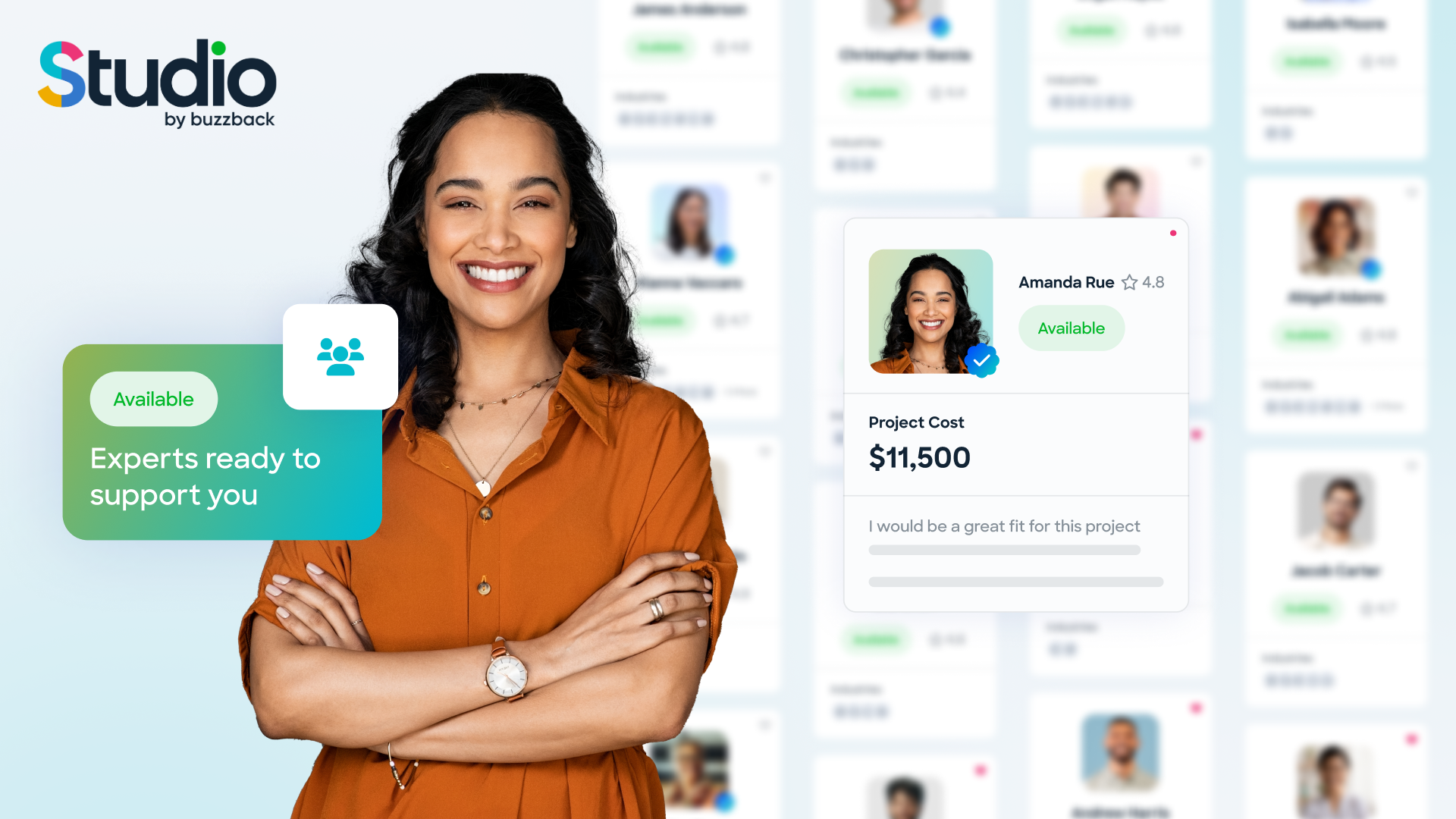
The problem this piece describes, the unpredictability of moderator quality, is the exact problem Studio was built to solve.
There are plenty of research moments and valid reasons where AI moderation or a researcher running their own sessions is the right choice. But between those moments, are the ones where depth, expert moderation and strategy is needed. And when those moments hit, finding the right professional moderator shouldn't be a leap of faith.
Studio's network includes 50+ vetted moderators, each with a detailed profile covering methodology specialties, industry expertise, cultural competency, and client-verified reviews. Every moderator has gone through a four-step vetting process: application review, live moderation assessment, reference verification, and ongoing performance monitoring based on client feedback.
You can search and filter by category, methodology, audience type, and availability. The match is deliberate. From RFP to kickoff in 48 hours or less.
Here's what a Keurig Dr Pepper research lead said about one of Studio's moderators: "Kathy has such extreme empathy. She is able to connect with respondents of all ages, backgrounds, and more, which gives her the unique ability to reach them on a level where they are consistently open and honest."
That's what expert moderation looks like. Studio makes it findable before the project starts.
Browse Studio's moderator network and filter by the expertise that matters to your next project.
The Standard Doesn't Change
The tools have expanded. AI moderation, DIY interviews, asynchronous platforms — all of these have real value, and researchers who know how to use them well have a genuine advantage. But the standard for what good qualitative research looks like hasn't moved.
The behaviors that separate useful data from noise are the same whether you're running your own sessions or evaluating someone else's. Now you know what to look for.
By
Liz White
Subscribe
Stay up to date on industry insights and resources from Studio.


